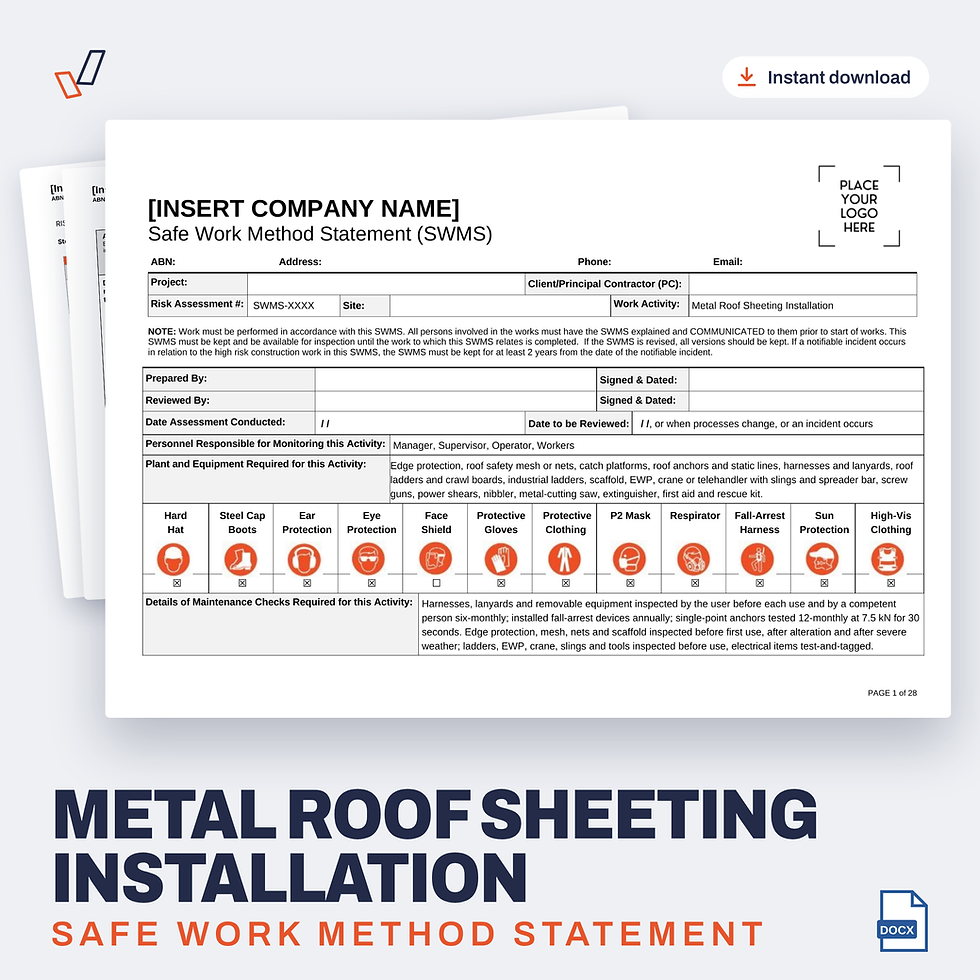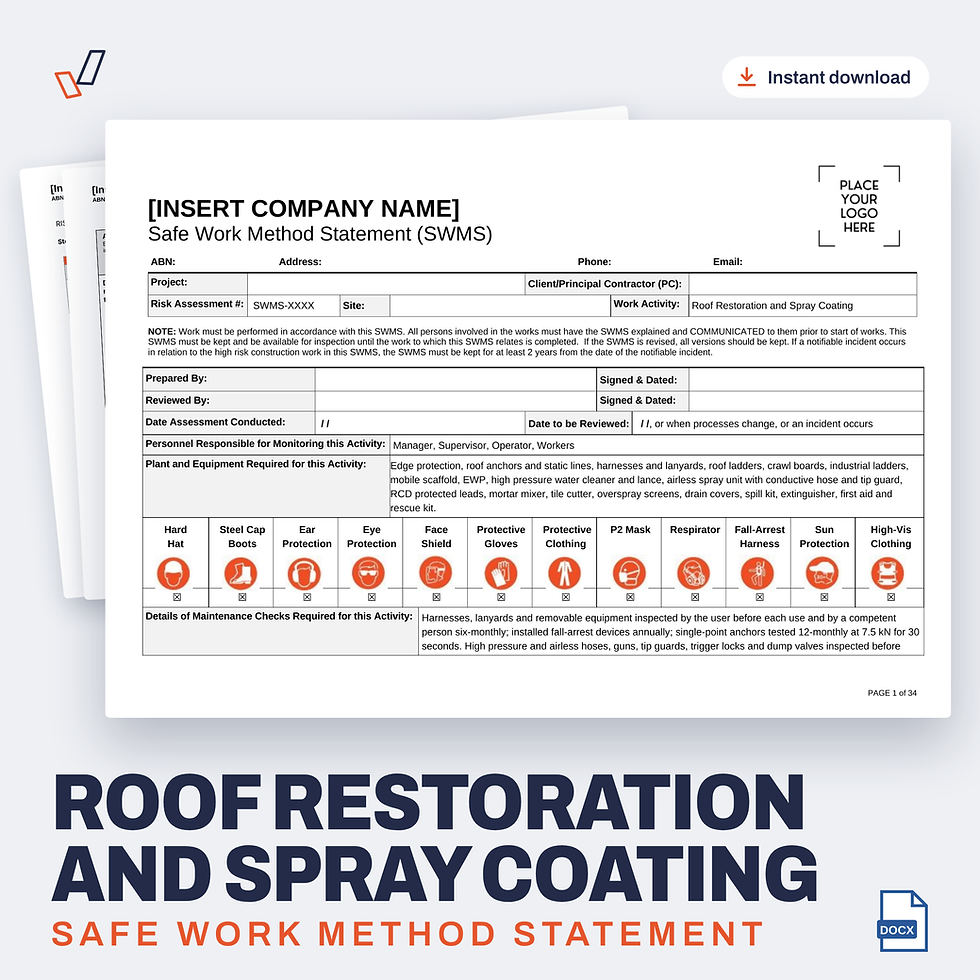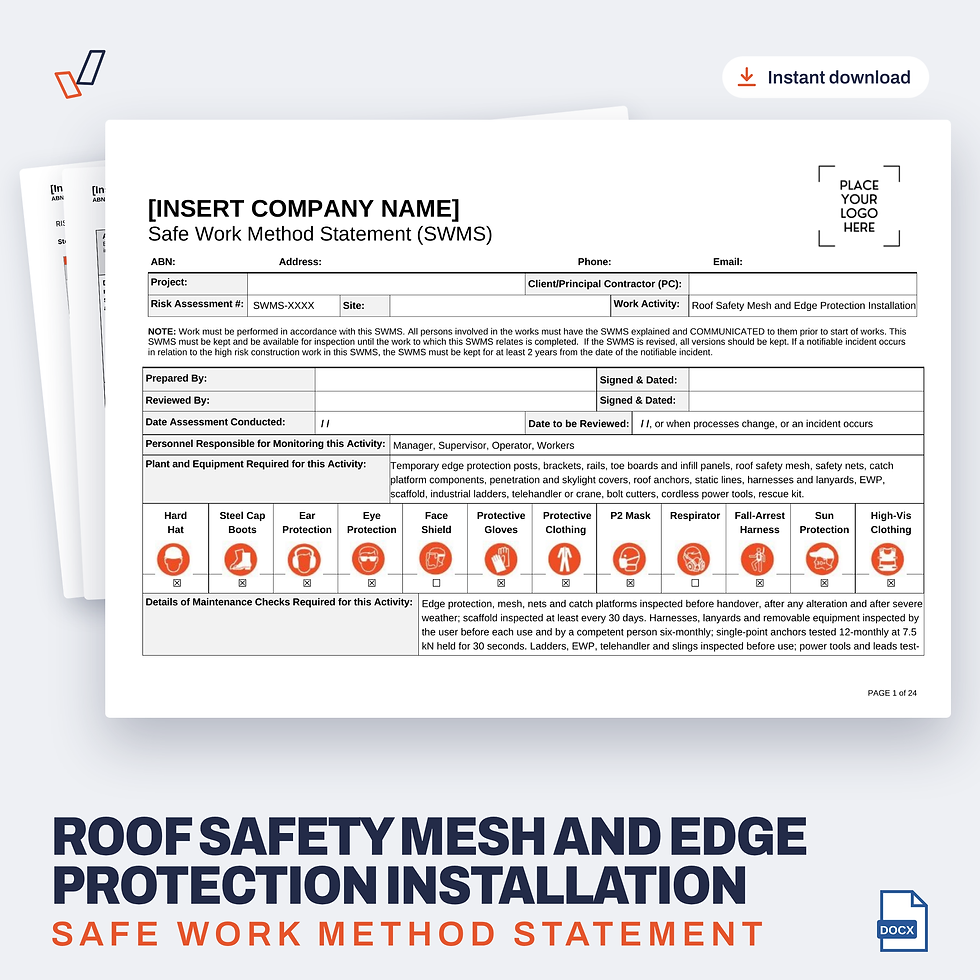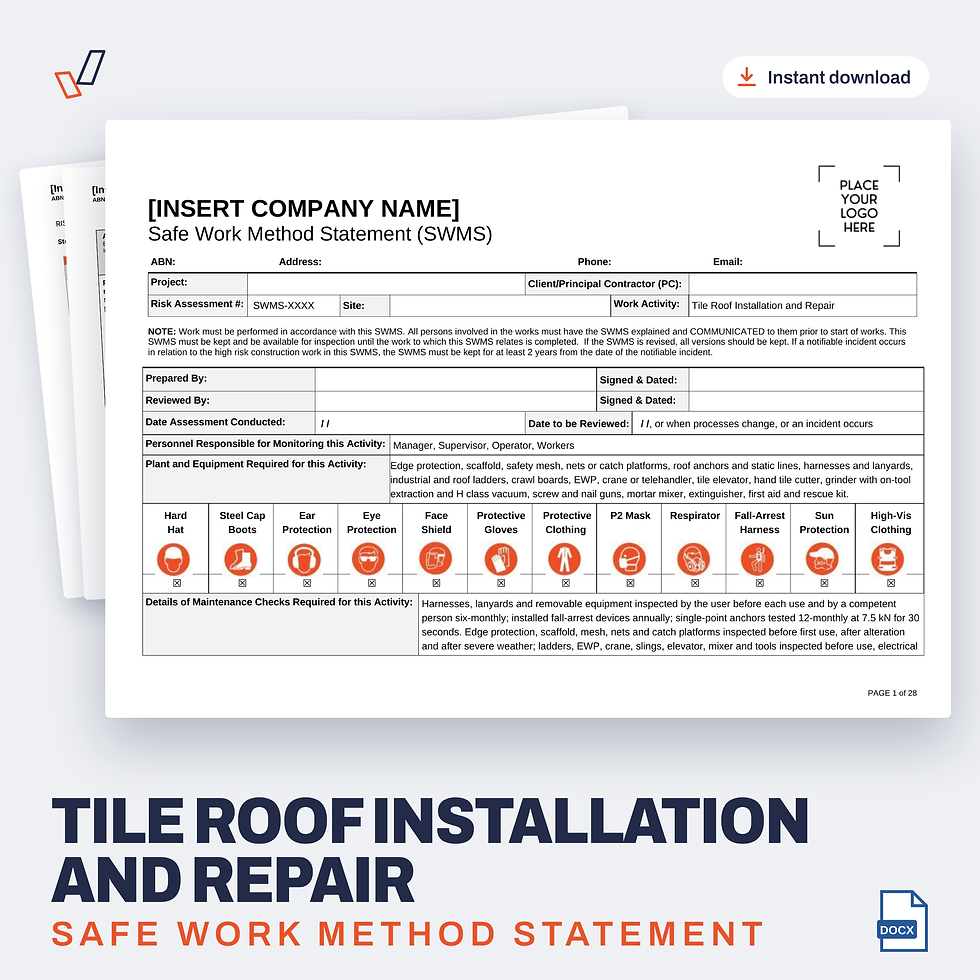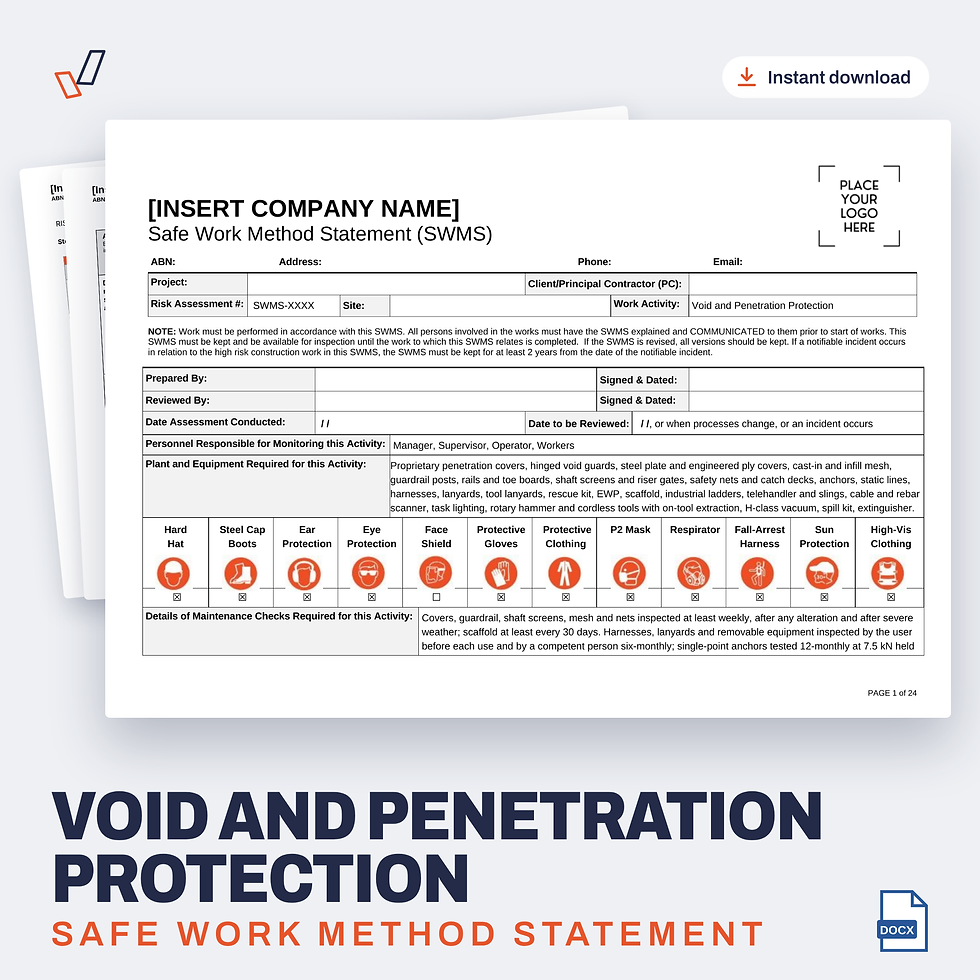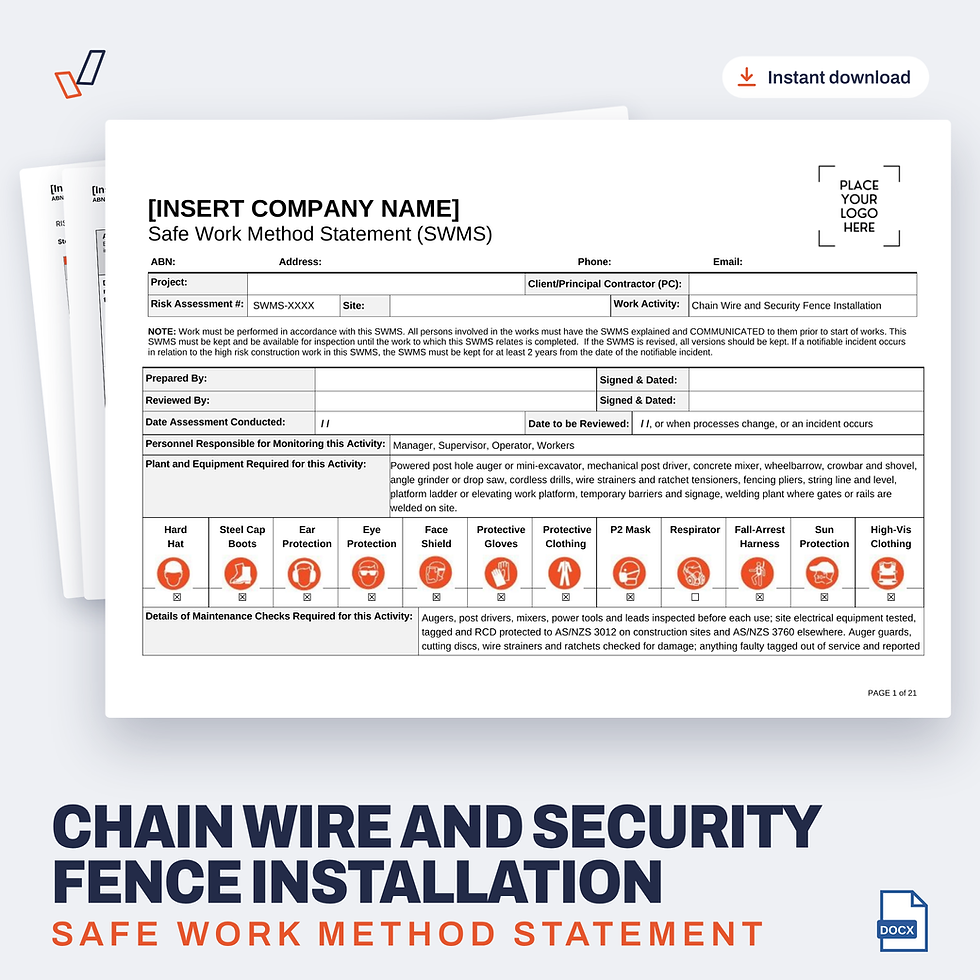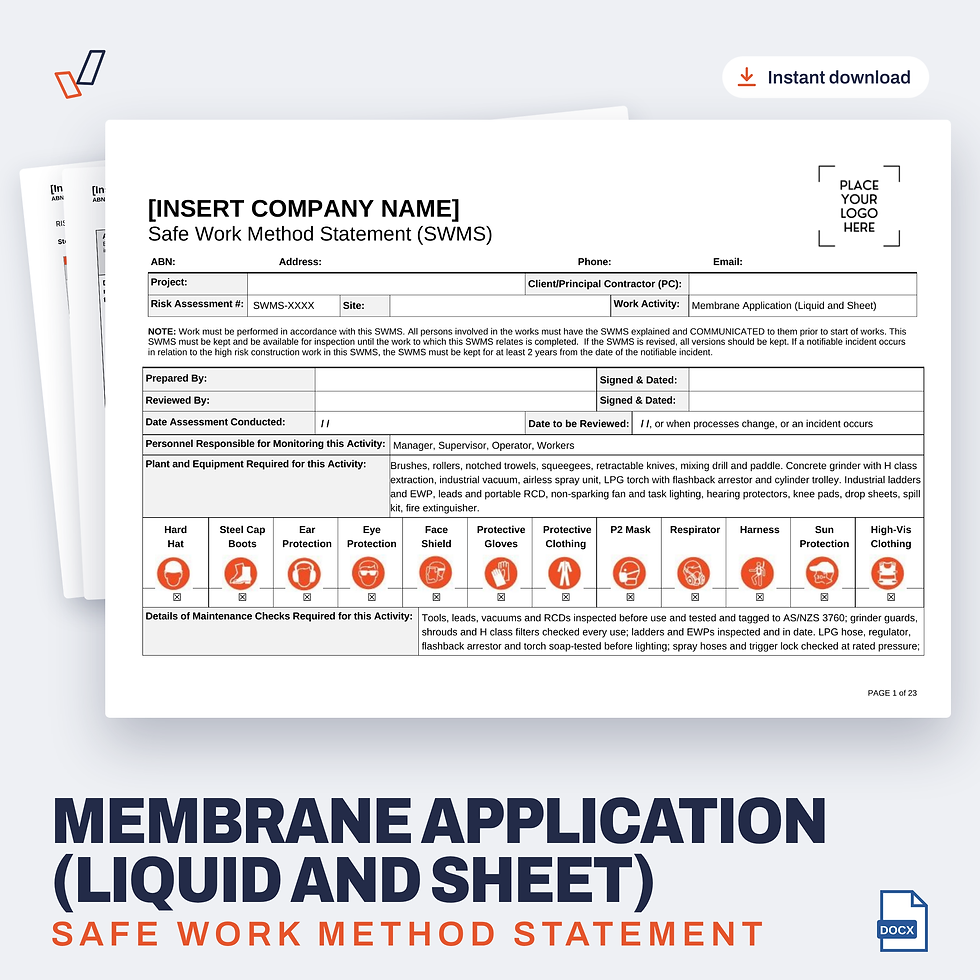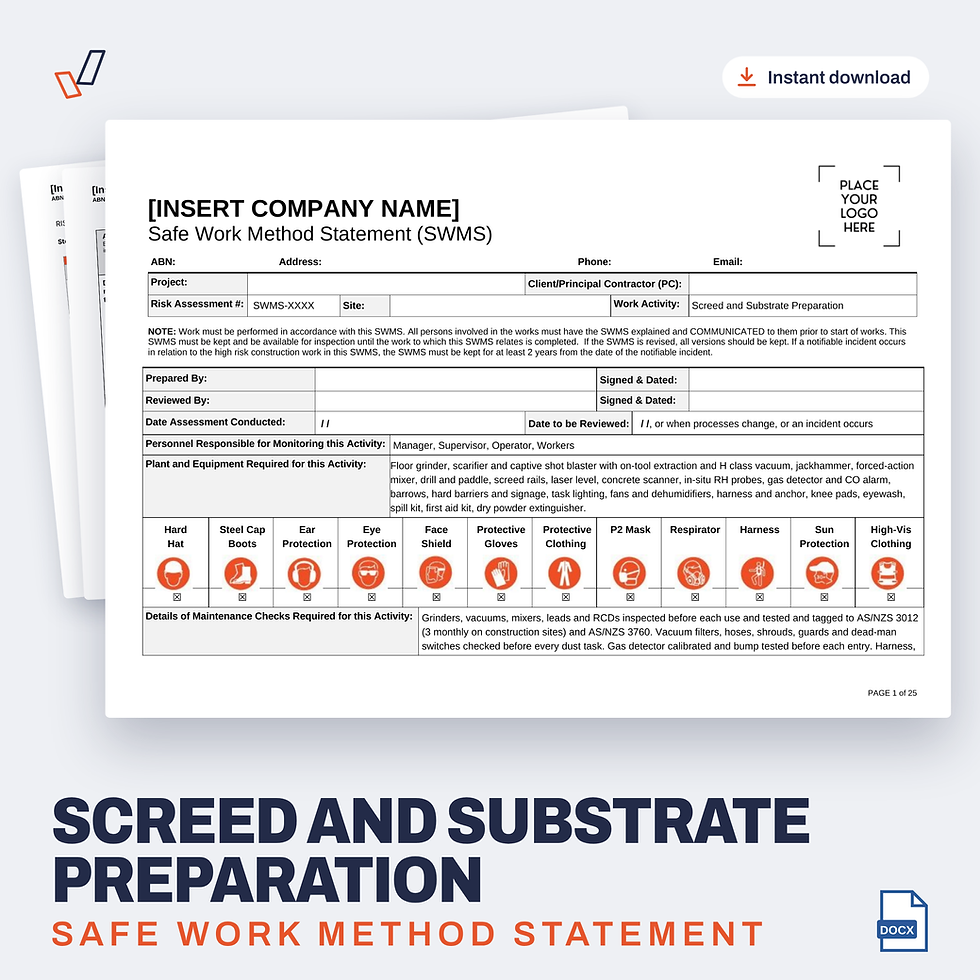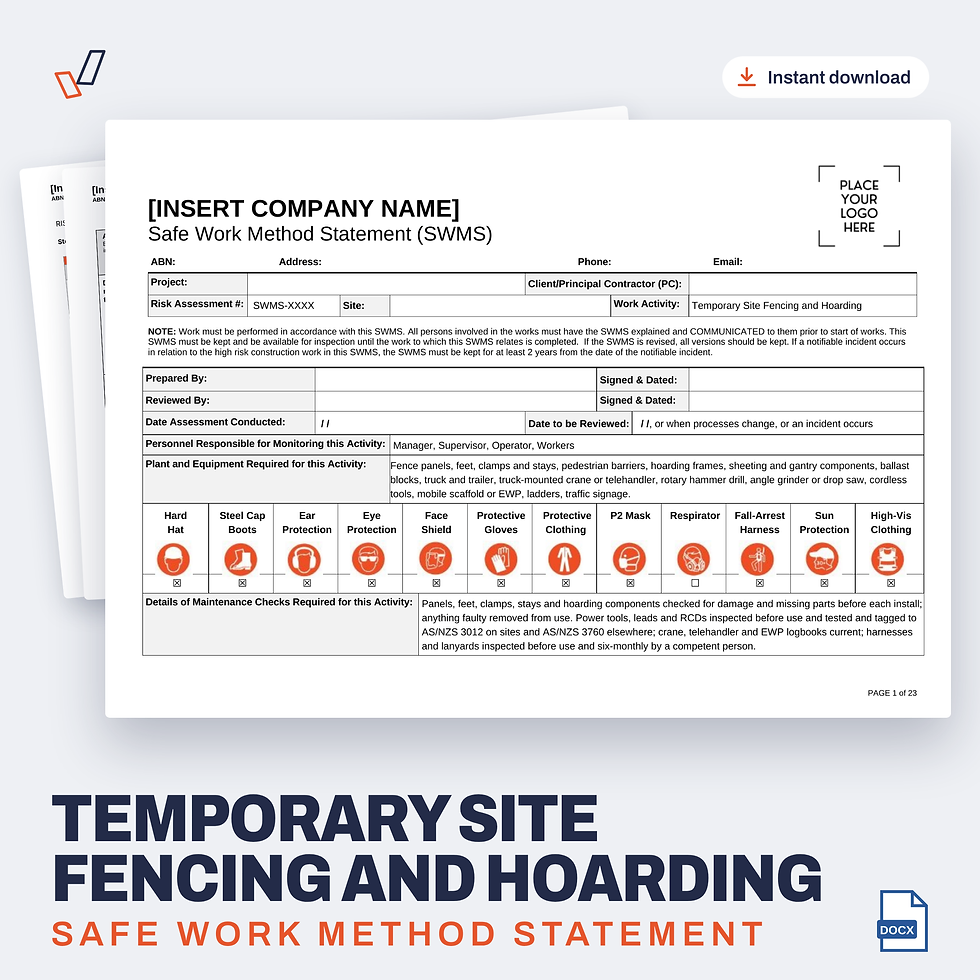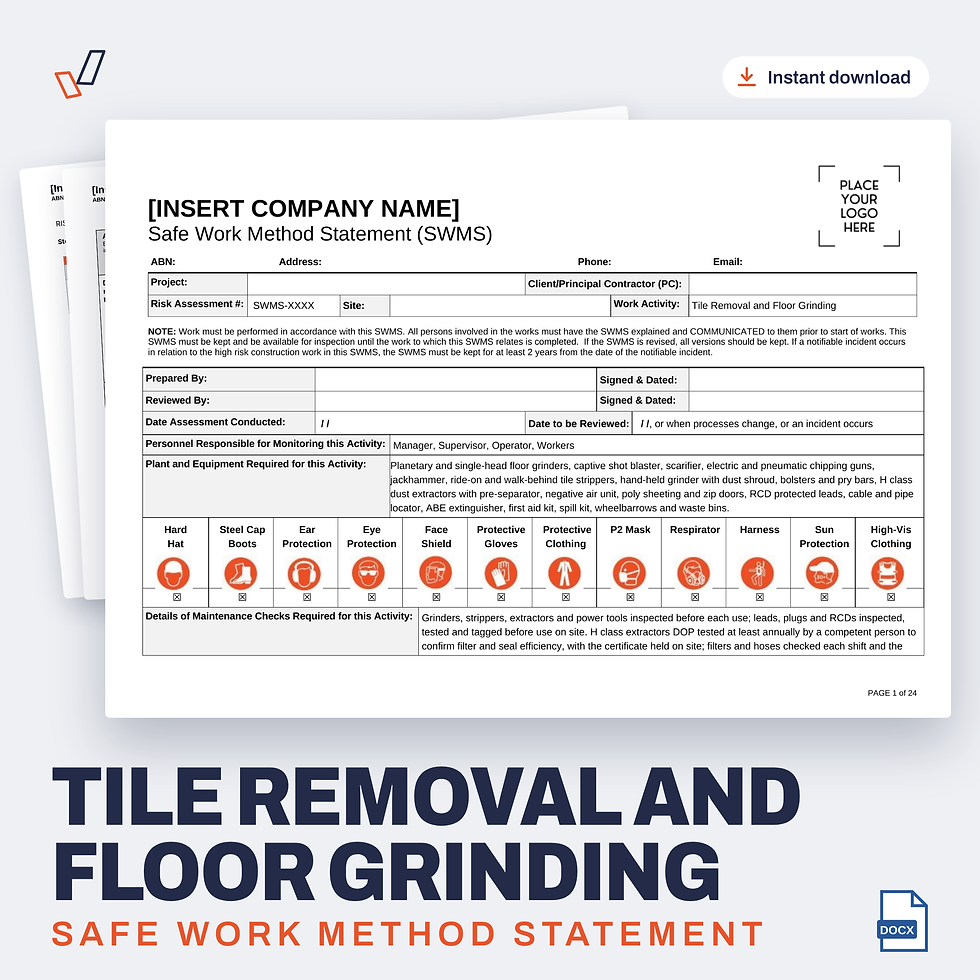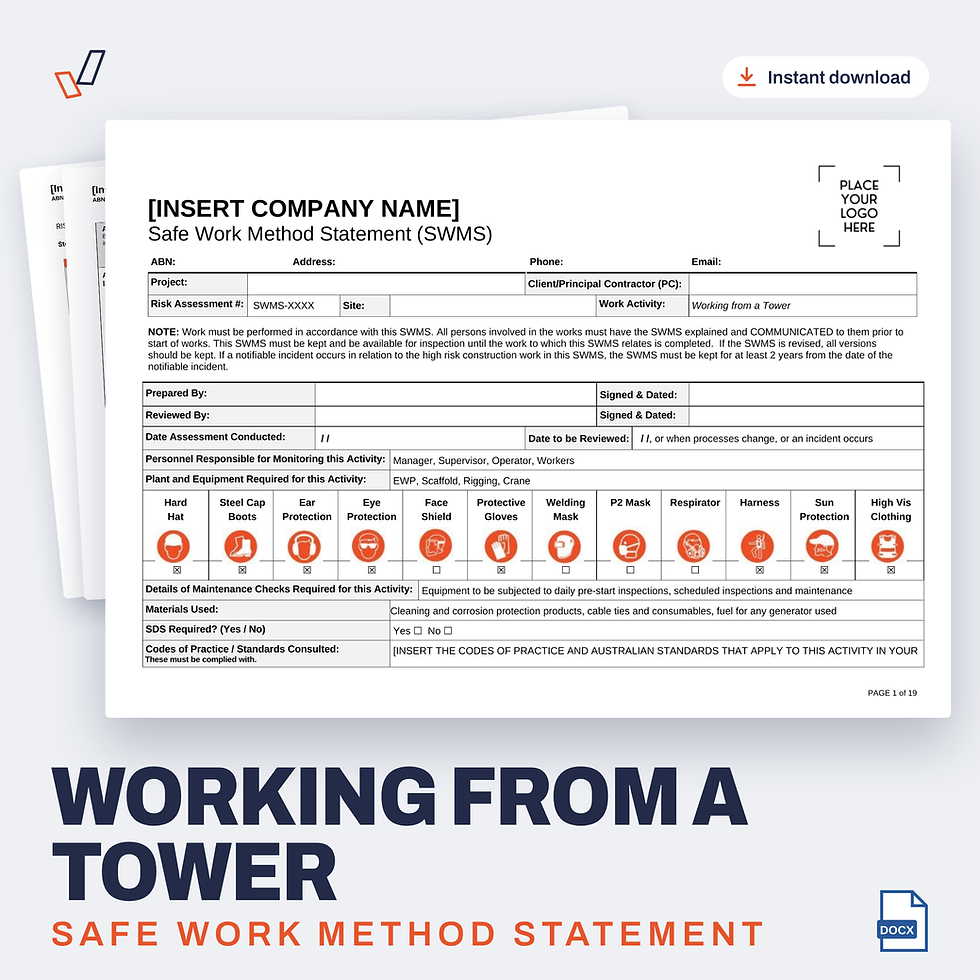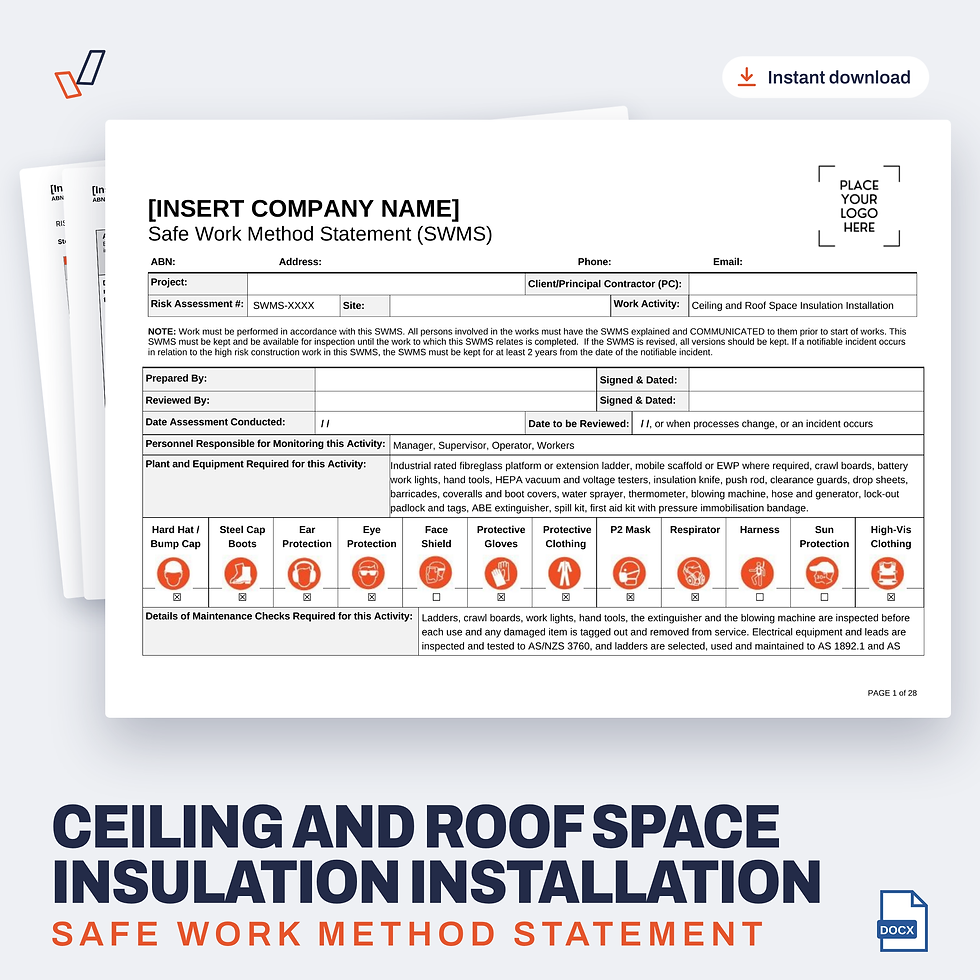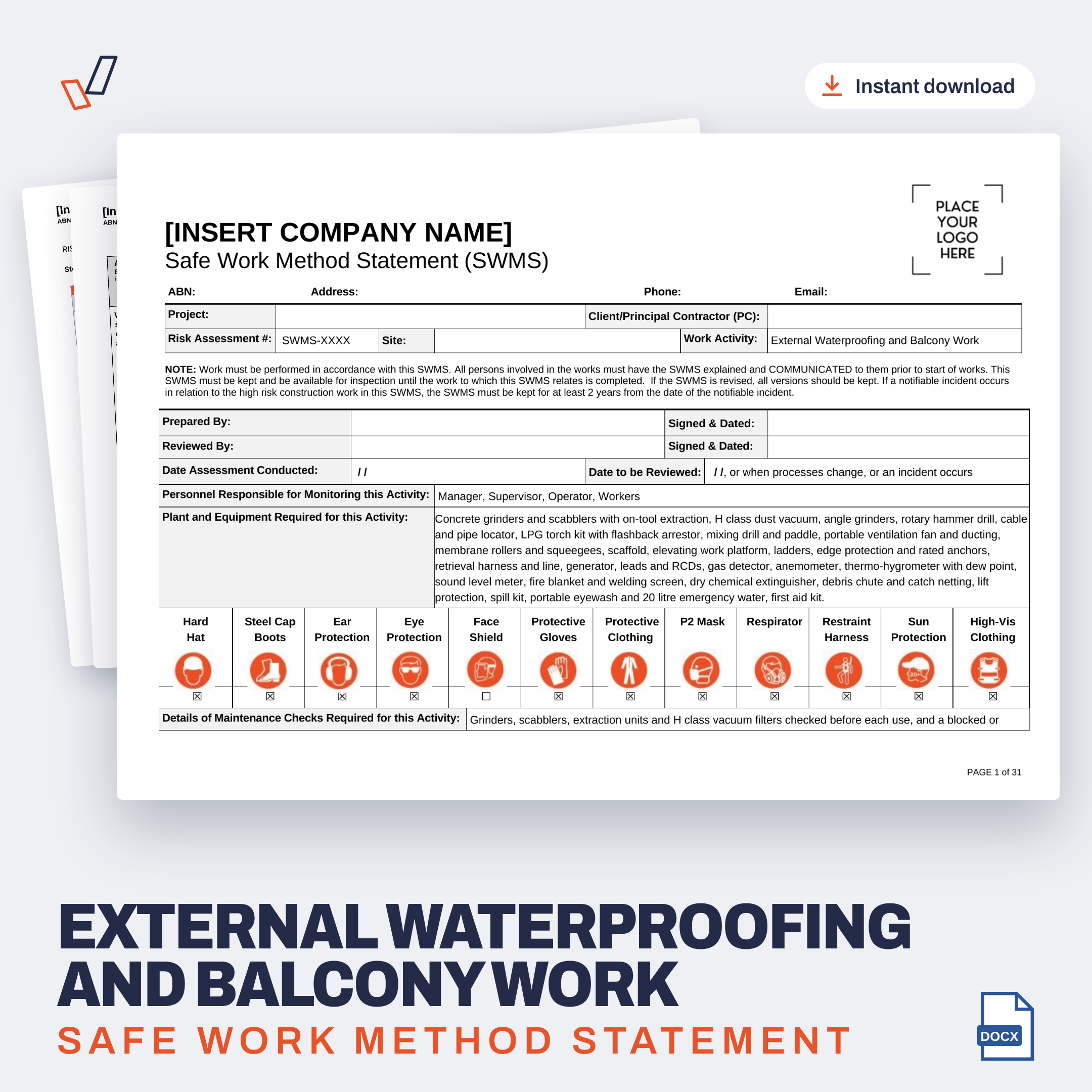

This External Waterproofing and Balcony Work SWMS (Safe Work Method Statement) is pre-filled for stripping, preparing and waterproofing balconies, roof decks and podiums with liquid and torch-on membranes. It covers 33 activities, from scope confirmation and edge protection to flood testing, handover and emergency response, with the hazards, control measures and risk ratings before and after controls for each. It's written by WHS specialists, aligned to Australian WHS legislation, and fully editable in Microsoft Word.
Who it's for
Specialist waterproofing and membrane contractors
Remedial building and balcony repair contractors
Builders and strata maintenance contractors
Tilers who prepare and waterproof balconies
Roofing contractors laying torch-on membranes
Use it to
Hand clients and principal contractors the SWMS they ask for
Apply for tenders and new jobs with your safety paperwork ready
Get through prequalification with Avetta, Cm3 and other contractor portals
Induct new workers and run toolbox talks on the task
What this SWMS covers
Scope confirmation, protecting the area below and edge protection where balustrades are removed
Removing and reinstating glass and aluminium balustrade panels
Scaffold, EWPs, hoisting materials and powered mobile plant in shared access areas
Asbestos in old membranes and screeds on pre-2003 balconies
Silica from grinding and scabbling, and dust migrating into occupied apartments
Bird droppings, mould and stagnant water, and service strikes when coring
Solvent primers, and isocyanates in polyurethane membranes
Torch-on hot work, fire watch and burns from the torch and molten bitumen
Enclosed planter boxes and podium voids, and flood testing
Screed, cement burns, weather, heat, noise and vibration
Chemical spills, working alone and securing the area during cure periods
Emergency response to falls, fire, chemical exposure or injury
What's included
Hazards and control measures for 33 work activities
Risk ratings before and after controls, with a 5x5 risk matrix and the hierarchy of controls
PPE requirements checklist and high risk construction work checklist
Plant and equipment list, materials and maintenance checks for scaffold, harnesses, LPG torches and gas detectors
Relevant Australian Standards, including AS 4654.2 for external waterproofing and AS/NZS 1891 for work at height
Training in hot work, fall prevention and the silica risk control plan, with dry cutting never permitted
Site specific hazards section for anything unique to your job
Worker sign-off sheet and worker consultation record
Why use this template
Saves hours compared with writing a SWMS from a blank page
Covers the most common hazards and control measures for this work, ready to use out of the box
Fully editable, so you can add, remove or change anything to suit your site and how your team works
Helps your business stay compliant, with risk ratings, worker sign-off and consultation records already set up
How it works
Buy online and download straight away. You'll also get an email with your link.
Add your logo, ABN, project and site details.
Check it suits your site and task, edit anything you need to, and consult your workers before you finalise it.
Brief your team and collect signatures.
Common questions
Do I need a SWMS for balcony waterproofing?
A SWMS is legally required when the job is high risk construction work, for example working at a balcony edge where someone could fall more than 2 metres, removing old membrane likely to contain asbestos, or applying solvent products in an enclosed planter where the atmosphere may become flammable. Outside those situations a SWMS isn't mandatory, but you still have to manage the risks. Builders, strata managers and prequalification portals often ask for one either way.
Does it cover the silica risk control plan?
Yes. It covers silica from grinding and scabbling concrete, training on the silica risk control plan for the task and the control it specifies, and the rule that dry cutting is never permitted. High risk crystalline silica processing has needed a silica risk control plan under the WHS Regulations since 1 September 2024.
Can I change it?
Yes. It's a Microsoft Word file, so you can add, remove or change any hazard, control or rating, and add your own logo and details.
Does it suit my state?
Yes. It's written to the model WHS laws and suits all states and territories, including Victoria under the OHS Act and Regulations.
What if it doesn't suit my work?
You're covered by our 30-day money-back guarantee if it isn't fit for purpose.