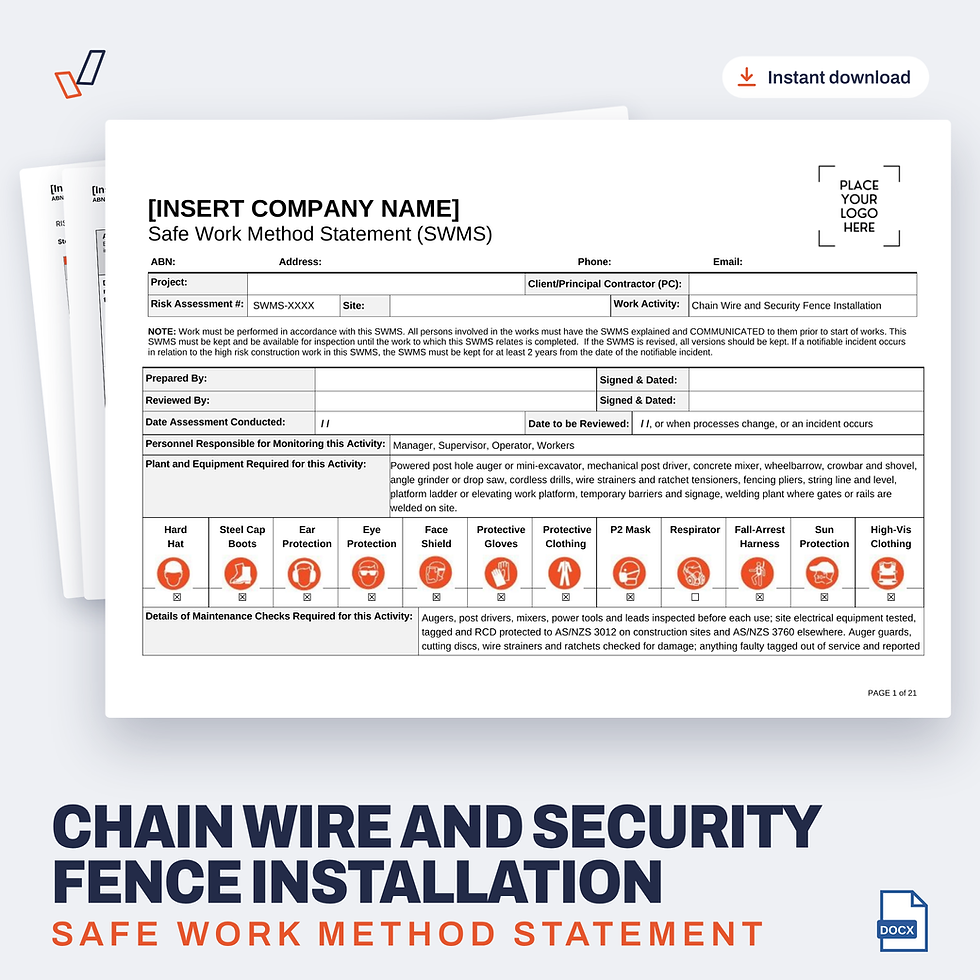
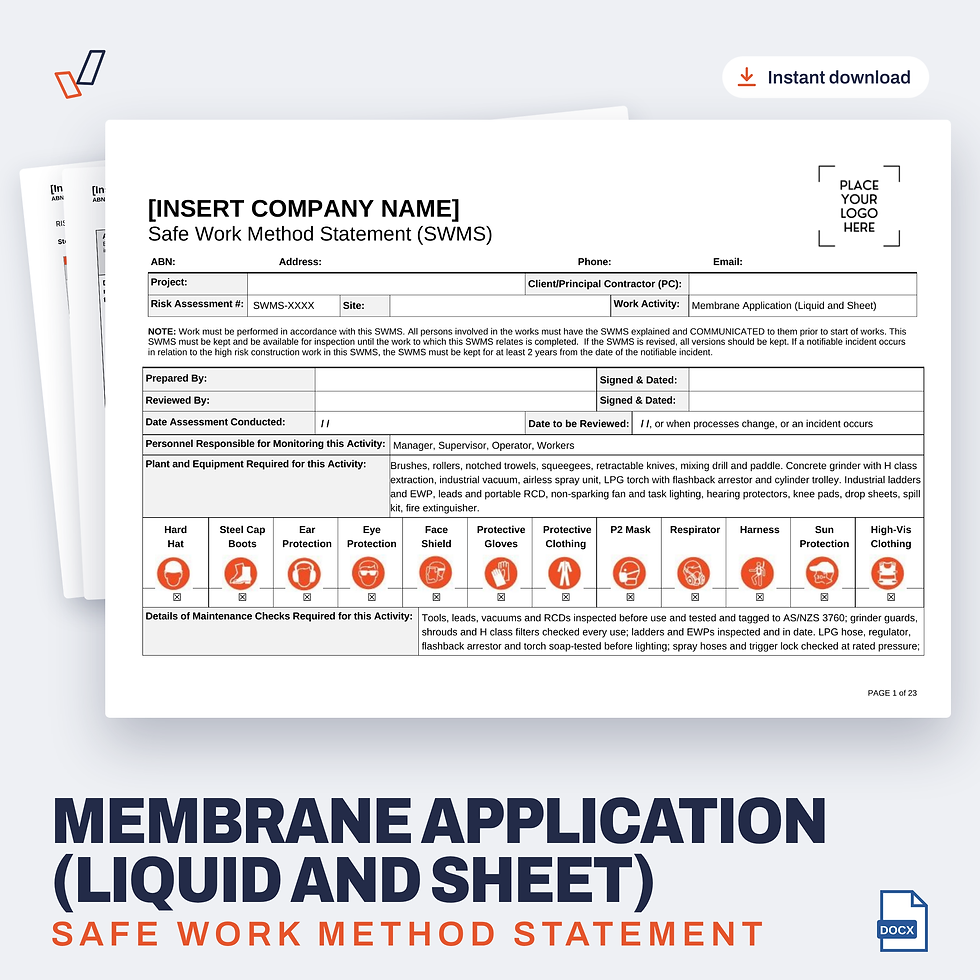
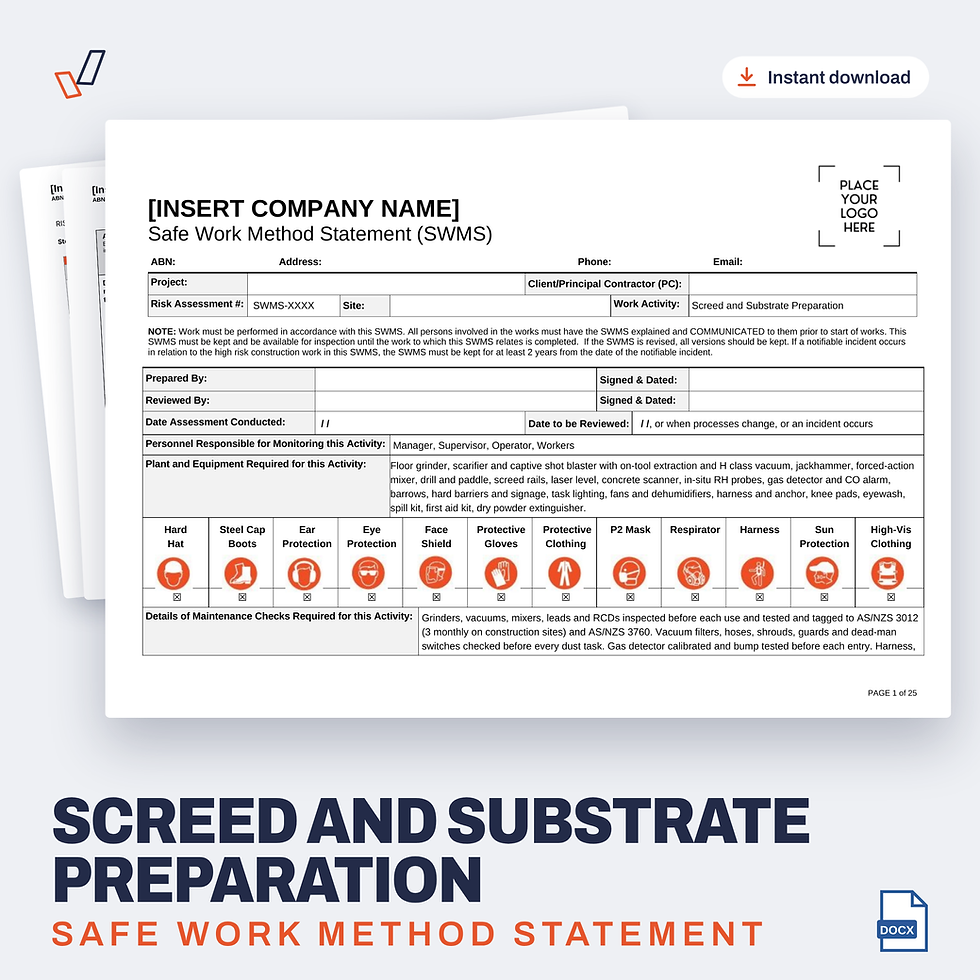
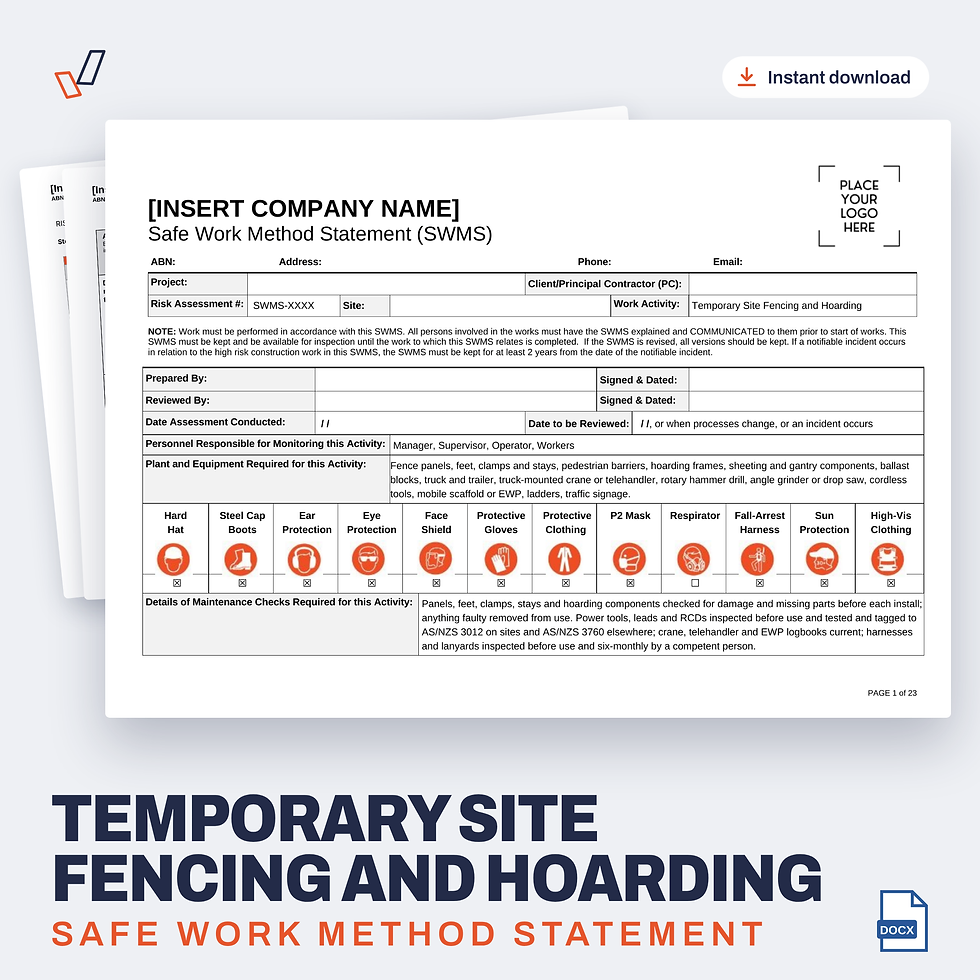
This Automatic Gate and Motor Installation SWMS (Safe Work Method Statement) is pre-filled and covers installing swing, sliding and in-ground gate operators, from footings and posts through to wiring, programming and force testing. It sets out the hazards, control measures and risk ratings before and after controls for 42 activities, from locating underground services to handover, securing the gateway and emergency response. It's written by WHS specialists, aligned to Australian WHS legislation, and fully editable in Microsoft Word.
Who it's for
Automatic gate installers and gate automation businesses
Fencing contractors who supply and fit powered gates
Electricians who connect and commission gate operators
Security and access control installers fitting intercoms and keypads
Use it to
Hand clients and principal contractors the SWMS they ask for
Apply for tenders and new jobs with your safety paperwork ready
Get through prequalification with Avetta, Cm3 and other contractor portals
Induct new workers and run toolbox talks on the task
What this SWMS covers
Locating underground services and assessing overhead powerlines before augering or trenching
Exclusion zones, traffic management at the road boundary, and dogs, occupiers and the public
Isolating an existing powered gate, and assessing a manual gate before fitting an operator
Setting out to avoid shear and crush points between the gate leaf and fixed structures
Augering post holes, operating mini excavators and cutting driveways, including silica dust
Concrete footings, erecting and bracing posts, and welding, grinding and hot work fire control
Hanging swing leaves and installing sliding gate track, rollers and in-ground operator pits
Stored energy in counterbalance springs, gate closers and boom arms
Mains connection by a licensed electrician, and solar panel, battery and DC supply hazards
Placing safety devices over crush points, then programming, force testing and client handover
Heat, storms, noise and vibration, working alone and wildlife along the fence line
Emergency response to gate entrapment, electric shock, fire or serious injury
What's included
Hazards and control measures for 42 work activities
Risk ratings before and after controls, with a 5x5 risk matrix and the hierarchy of controls
PPE requirements checklist and high risk construction work checklist
Plant and equipment list, materials, maintenance checks and the training each worker needs
Relevant Australian Standards, including AS/NZS 60335.2.103 for gate drives and AS/NZS 3000 for wiring
Licence and competency notes covering electricians, cabler registration, crane and dogging licences, and force testing
Site specific hazards section for anything unique to your job
Worker sign-off sheet and worker consultation record
Why use this template
Saves hours compared with writing a SWMS from a blank page
Covers the most common hazards and control measures for this work, ready to use out of the box
Fully editable, so you can add, remove or change anything to suit your site and how your team works
Helps your business stay compliant, with risk ratings, worker sign-off and consultation records already set up
How it works
Buy online and download straight away. You'll also get an email with your link.
Add your logo, ABN, project and site details.
Check it suits your site and task, edit anything you need to, and consult your workers before you finalise it.
Brief your team and collect signatures.
Common questions
Do I need a SWMS for automatic gate installation?
A SWMS is legally required when the job is high risk construction work, for example working next to a road in use, near energised electrical installations, or where a mini excavator or other powered mobile plant is moving. Outside those situations a SWMS isn't mandatory, but you still have to manage the risks, and a SWMS is a sound way to record how. Clients, head contractors and prequalification portals often ask for one either way.
Does it cover force testing and safety devices?
Yes. It covers positioning photoelectric beams, safety edges and loop detectors over the actual crush and shear points, force testing with a calibrated force gauge, and showing the client how to release the gate manually in a power failure.
Can I change it?
Yes. It's a Microsoft Word file, so you can add, remove or change any hazard, control or rating, and add your own logo and details.
Does it suit my state?
Yes. It's written to the model WHS laws and suits all states and territories, including Victoria under the OHS Act and Regulations.
What if it doesn't suit my work?
You're covered by our 30-day money-back guarantee if it isn't fit for purpose.