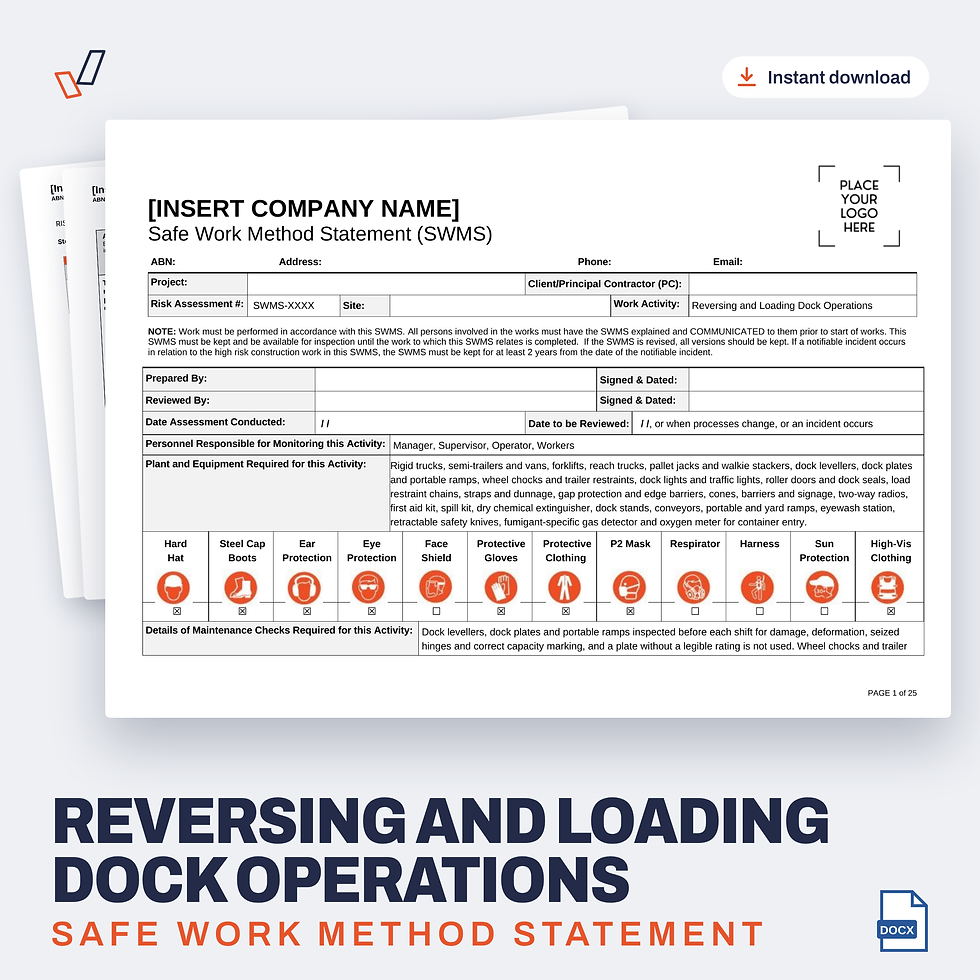
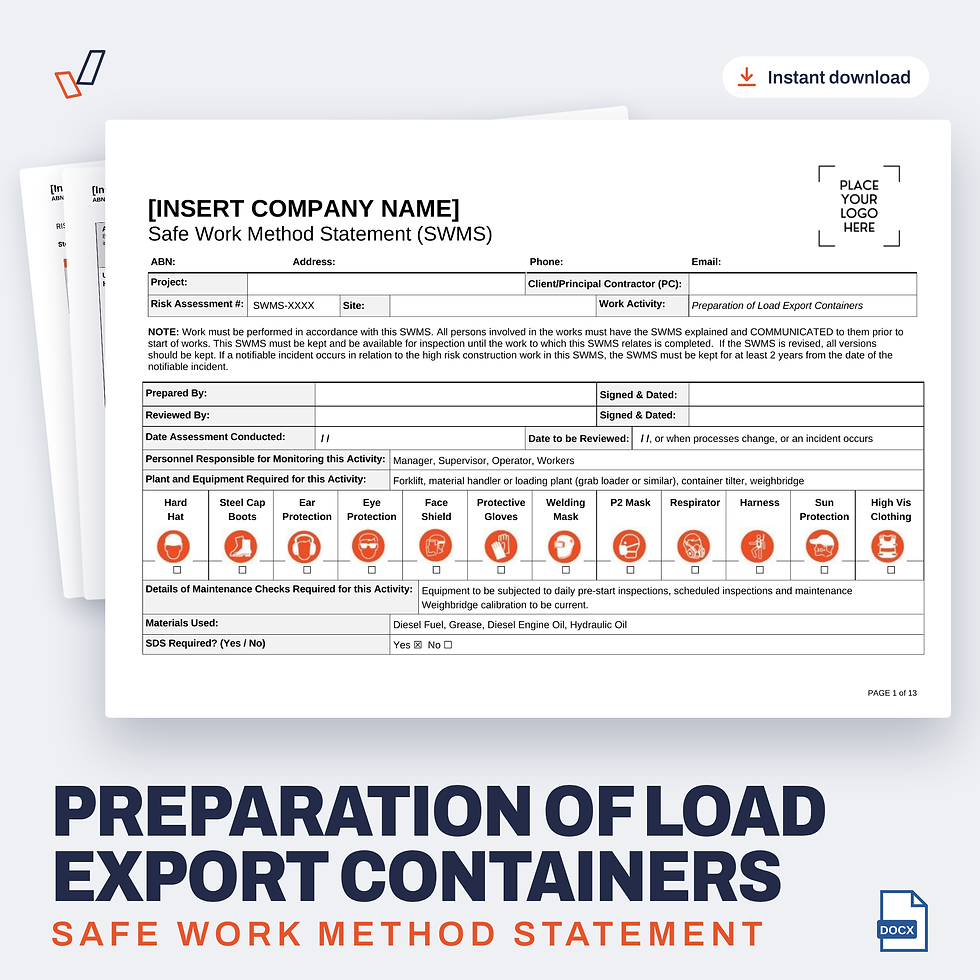
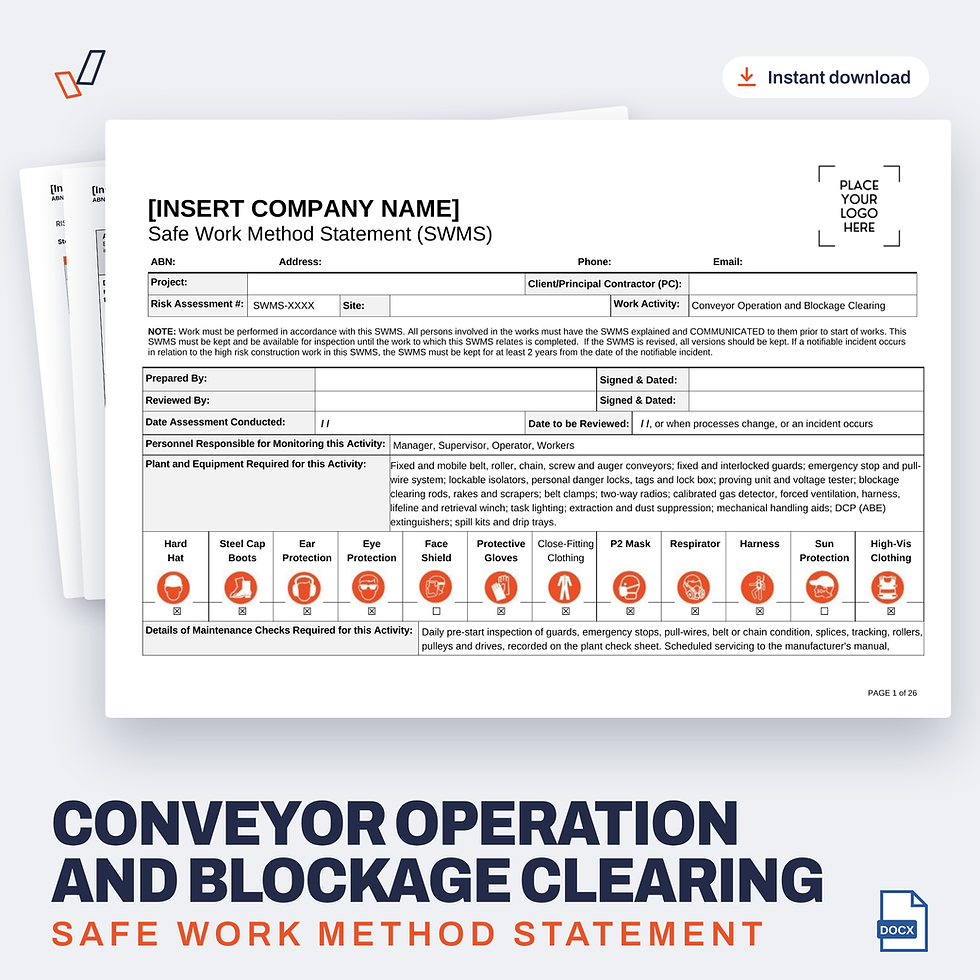
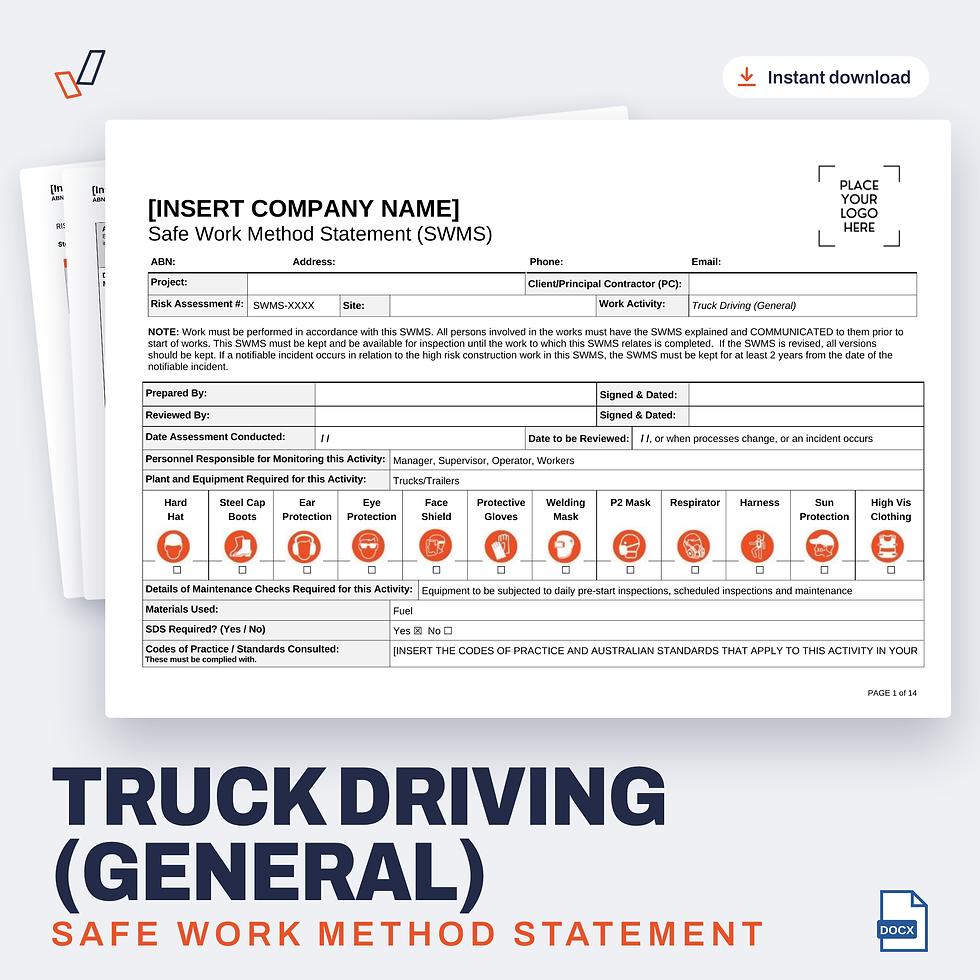
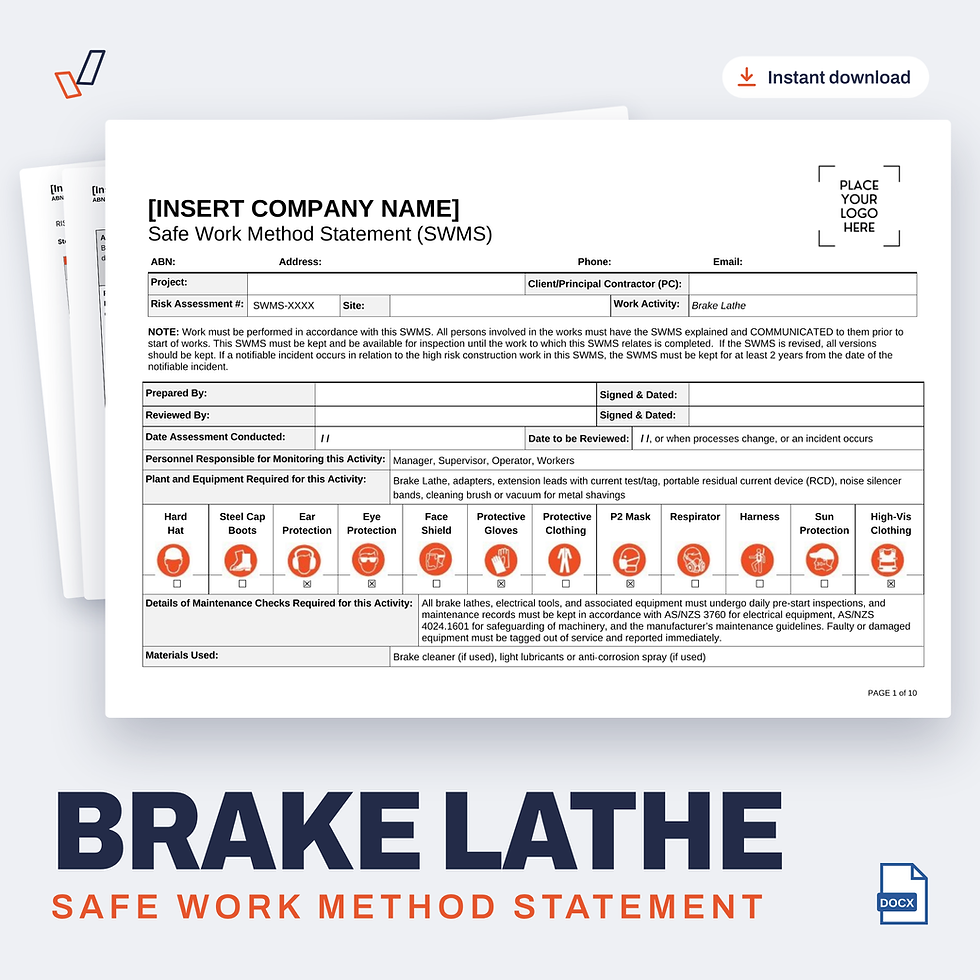
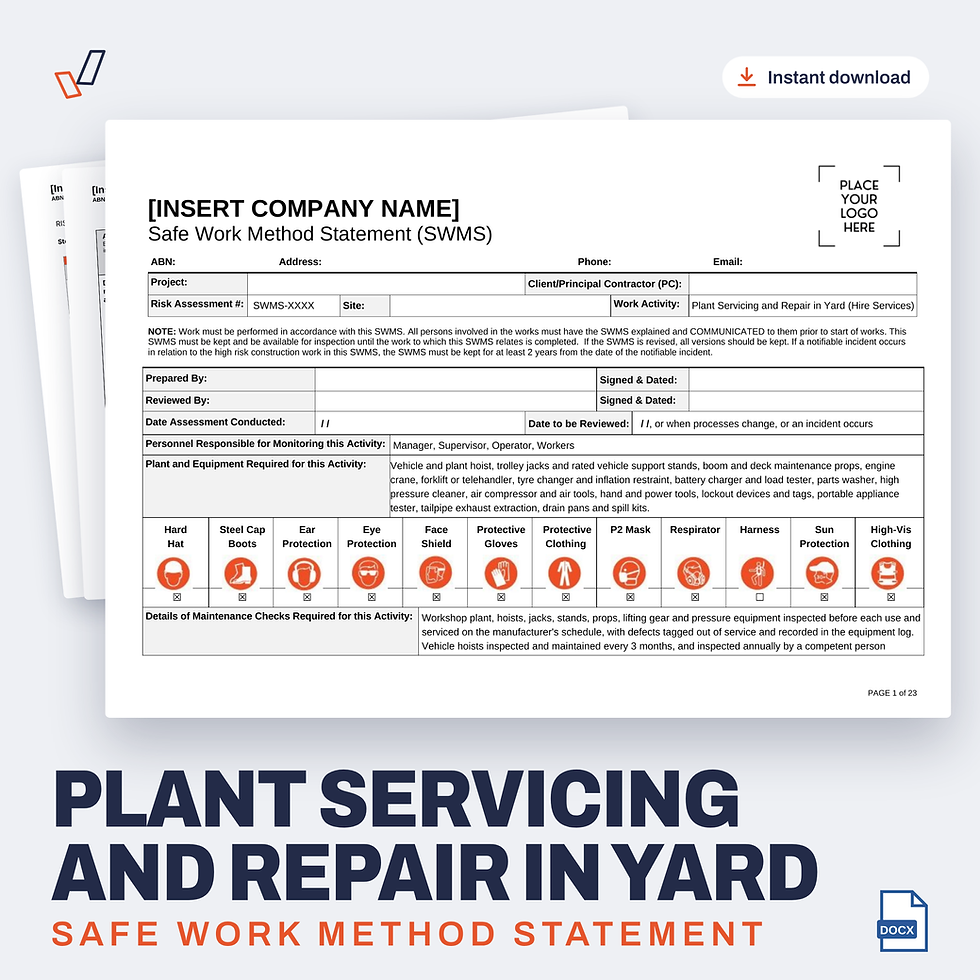
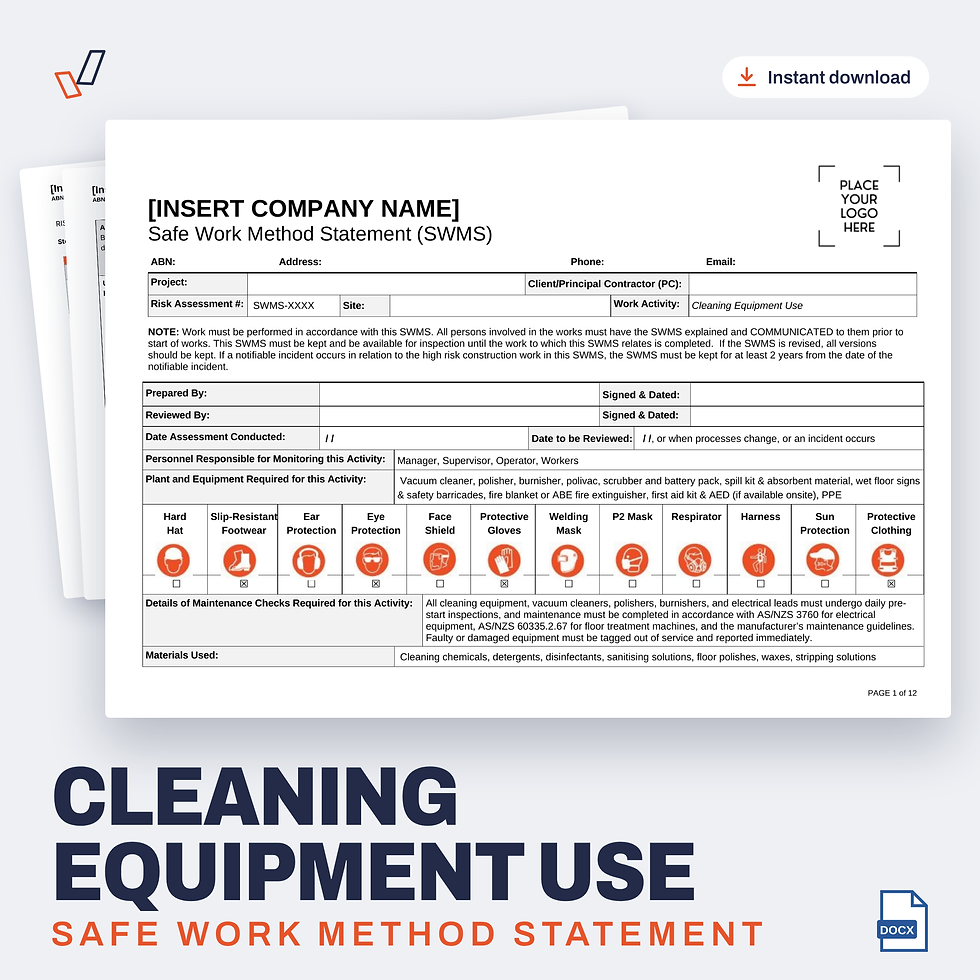
This Cold Store Operations SWMS (Safe Work Method Statement) is pre-filled for receiving, storing, picking and dispatching chilled and frozen product in a cold store. It covers 30 activities, from the daily pre-start and refrigeration alarm checks to end of shift checks and emergency response, with the hazards, control measures and risk ratings before and after controls for each. It's written by WHS specialists, aligned to Australian WHS legislation, and fully editable in Microsoft Word.
Who it's for
Cold storage and refrigerated warehousing operators
Third-party logistics and food distribution centres
Food manufacturers and processors with on-site cold stores
Supermarket and wholesale distribution warehouses
Labour hire providers placing workers in cold stores
A SWMS isn't just for building sites. Many warehouses and logistics businesses use one as the written risk assessment for a task, the same way others use a JSA or Safe Work Procedure.
Use it to
Show clients, insurers and auditors how you manage the risks
Apply for tenders, contracts and supplier panels
Get through prequalification with Avetta, Cm3 and other contractor portals
Induct new workers and train them in the task
What this SWMS covers
Checks of refrigeration plant, gas detection, cold room alarms and internal door releases
Traffic management and pedestrian separation for forklifts and reach trucks
Shift work, night work, fatigue and pick-rate pressure
Loading dock hazards, including reversing trucks, trailer creep and dock edge falls
Entrapment in freezers and chillers, and high-speed doors and strip curtains
Hypothermia, frostbite and wind chill, plus heat stress on the ambient dock
Forklift operation on ice and frost, fogged screens and carbon monoxide from LPG or diesel plant
Order picking and high-level cleaning at height, and falling ice
Racking storage, rack collapse and manual handling of frozen product
Ammonia and refrigerant releases, isolation and lockout, and controlled atmosphere room entry
Dry ice, cleaning chemicals, battery charging and fire in insulated panel buildings
Emergency response to entrapment, cold injury, fire or refrigerant release
What's included
Hazards and control measures for 30 work activities
Risk ratings before and after controls, with a 5x5 risk matrix and the hierarchy of controls
PPE requirements checklist and high risk construction work checklist
Plant and equipment list, materials and maintenance checks, including gas detection and door release testing
Relevant Australian Standards, including AS 4084.2 for racking and AS 2359 for powered industrial trucks
Licence and competency requirements for forklift operators, refrigeration technicians and confined space entrants
Site specific hazards section for anything unique to your job
Worker sign-off sheet and worker consultation record
Why use this template
Saves hours compared with writing a SWMS from a blank page
Covers the most common hazards and control measures for this work, ready to use out of the box
Fully editable, so you can add, remove or change anything to suit your site and how your team works
Helps your business stay compliant, with risk ratings, worker sign-off and consultation records already set up
How it works
Buy online and download straight away. You'll also get an email with your link.
Add your logo, ABN, project and site details.
Check it suits your site and task, edit anything you need to, and consult your workers before you finalise it.
Brief your team and collect signatures.
Common questions
Do I need a SWMS for cold store operations?
Only when the work is high risk construction work, for example maintenance or fit-out work in an area with artificial extremes of temperature or where powered mobile plant is moving. Day-to-day warehouse work isn't construction, so a SWMS isn't a legal requirement for it. You still have to manage risks like freezer entrapment and forklift traffic, and a SWMS is a practical way to record how. Clients, insurers and prequalification portals often ask for one.
Does it cover ammonia refrigeration and controlled atmosphere rooms?
Yes. It covers anhydrous ammonia and other refrigerant releases, and entry to controlled atmosphere rooms where oxygen can be as low as 2 per cent. Entrants and standby persons need current confined space entry training, and nominated responders are trained in self-contained breathing apparatus.
Can I change it?
Yes. It's a Microsoft Word file, so you can add, remove or change any hazard, control or rating, and add your own logo and details.
Does it suit my state?
Yes. It's written to the model WHS laws and suits all states and territories, including Victoria under the OHS Act and Regulations.
What if it doesn't suit my work?
You're covered by our 30-day money-back guarantee if it isn't fit for purpose.