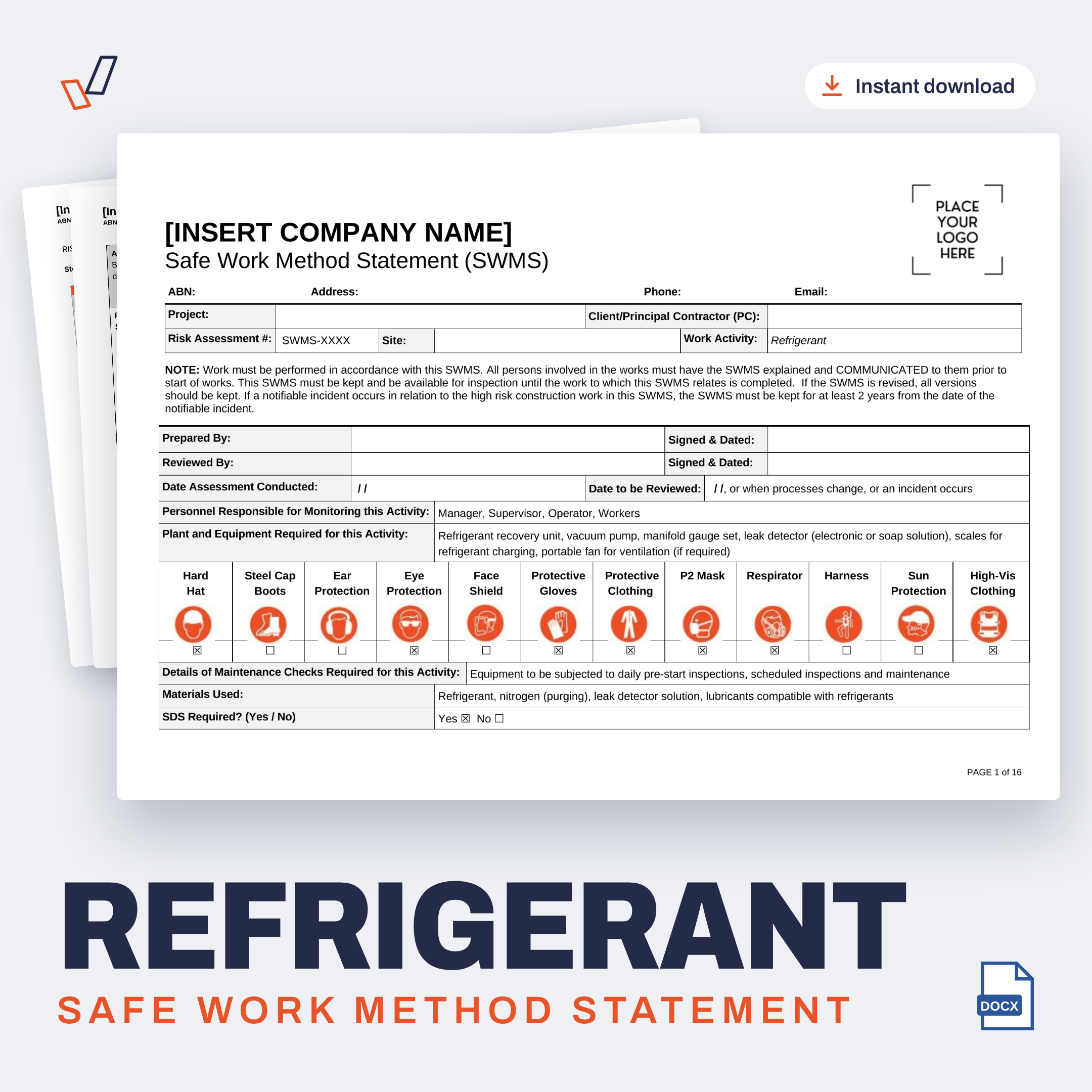

This Refrigerant SWMS (Safe Work Method Statement) is pre-filled and covers handling, storing, charging, recovering and releasing refrigerant on air conditioning and refrigeration systems. It covers 13 activities, from pre-operating safety checks to hot work, pressure testing and flammable refrigerants, with the hazards, control measures and risk ratings before and after controls for each. It's written by WHS specialists, aligned to Australian WHS legislation, and fully editable in Microsoft Word.
Who it's for
Refrigeration and air conditioning technicians
HVAC installation and service businesses
Commercial refrigeration and cold room contractors
Facilities maintenance crews servicing plant rooms
Use it to
Hand clients and principal contractors the SWMS they ask for
Apply for tenders and new jobs with your safety paperwork ready
Get through prequalification with Avetta, Cm3 and other contractor portals
Induct new workers and run toolbox talks on the task
What this SWMS covers
Pre-operating safety checks, competence, fumes and chemical spills
Labelling refrigerant and storing it away from incompatible chemicals
Handling refrigerant cylinders to avoid strains, sprains and dropped cylinders
Eye injuries, burns, frostbite, suffocation and poisoning from refrigerant
Checking hoses, seals and containers for wear and damage
Charging or recovering refrigerant in small rooms and plant areas
Electrical safety when using powered tools near refrigerant systems
Preventing the release of refrigerant to atmosphere
Licensing, recovery cylinder overfilling and mixing refrigerants
Oxygen displacement in plant rooms, basements and enclosed spaces
Hot work, nitrogen pressure testing and A2L and other flammable refrigerants
Response to injuries, incidents and damaged equipment
What's included
Hazards and control measures for 13 work activities
Risk ratings before and after controls, with a 5x5 risk matrix and the hierarchy of controls
PPE requirements checklist and high risk construction work checklist
Plant and equipment list, including recovery unit, vacuum pump, manifold gauges and leak detector
Materials, maintenance checks and the SDS training each worker needs
Site specific hazards section for anything unique to your job
Worker sign-off sheet and worker consultation record
Why use this template
Saves hours compared with writing a SWMS from a blank page
Covers the most common hazards and control measures for this work, ready to use out of the box
Fully editable, so you can add, remove or change anything to suit your site and how your team works
Helps your business stay compliant, with risk ratings, worker sign-off and consultation records already set up
How it works
Buy online and download straight away. You'll also get an email with your link.
Add your logo, ABN, project and site details.
Check it suits your site and task, edit anything you need to, and consult your workers before you finalise it.
Brief your team and collect signatures.
Common questions
Do I need a SWMS for refrigerant work?
If it's construction work, yes: work on or near refrigerant lines is one of the high risk construction work categories. Charging or recovering refrigerant in an enclosed plant room may also mean working in a contaminated atmosphere if there's a leak. Outside construction work a SWMS isn't mandatory, but you still have to manage the risks, and a SWMS is a sound way to record how. Clients and head contractors often ask for one either way.
Does it cover flammable refrigerants?
Yes. It covers fire and explosion risks from A2L and other flammable refrigerants, applying heat to a charged or pressurised system, and using nitrogen rather than oxygen to pressure test a system.
Can I change it?
Yes. It's a Microsoft Word file, so you can add, remove or change any hazard, control or rating, and add your own logo and details.
Does it suit my state?
Yes. It's written to the model WHS laws and suits all states and territories, including Victoria under the OHS Act and Regulations.
What if it doesn't suit my work?
You're covered by our 30-day money-back guarantee if it isn't fit for purpose.