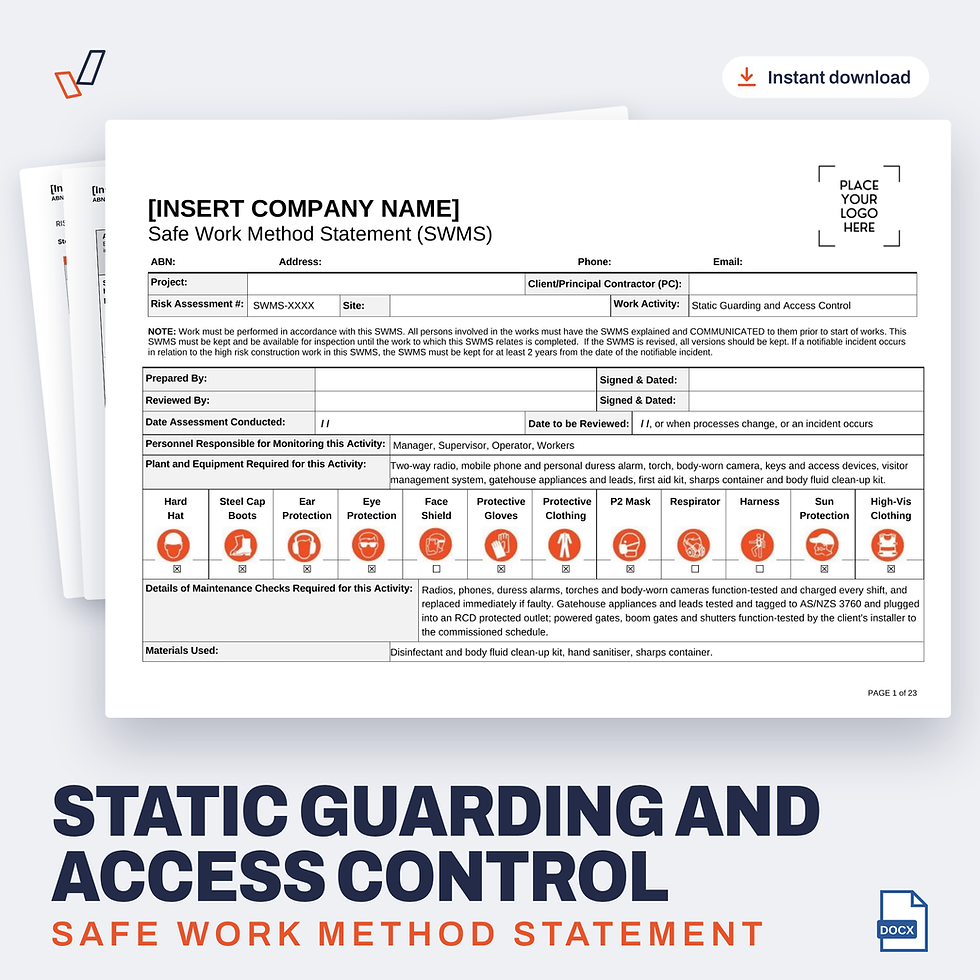
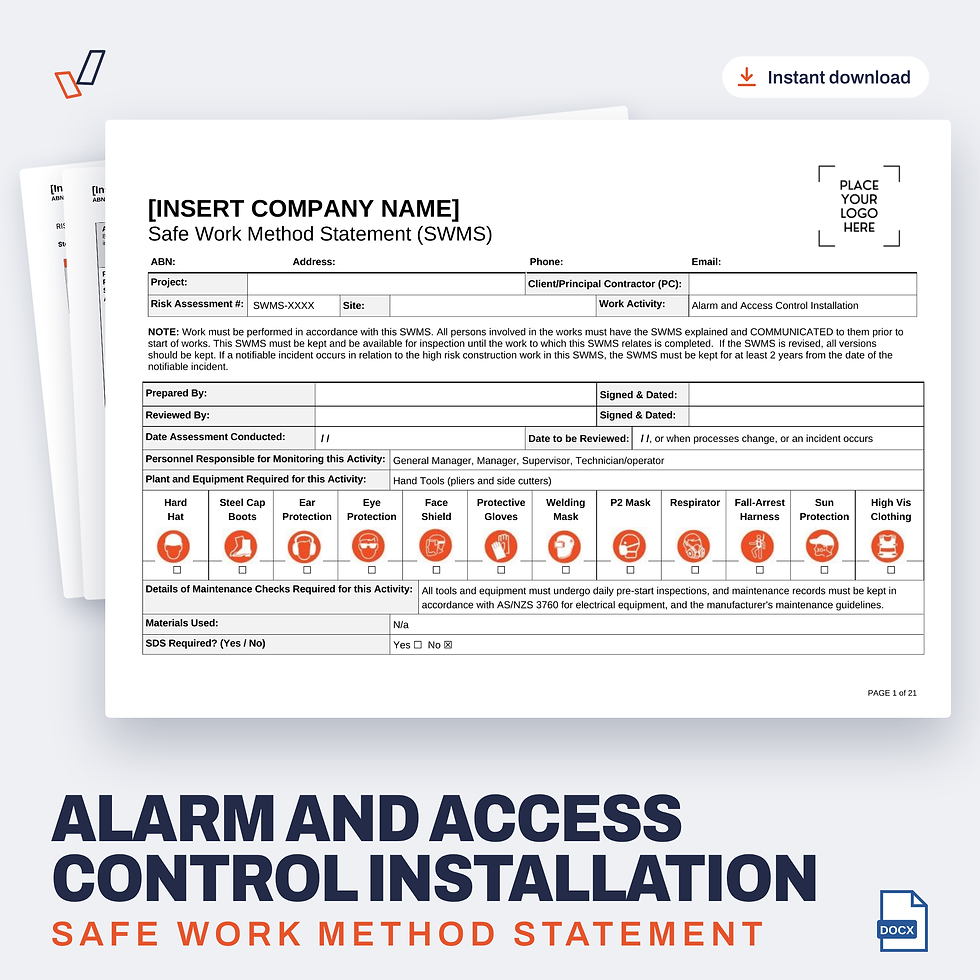
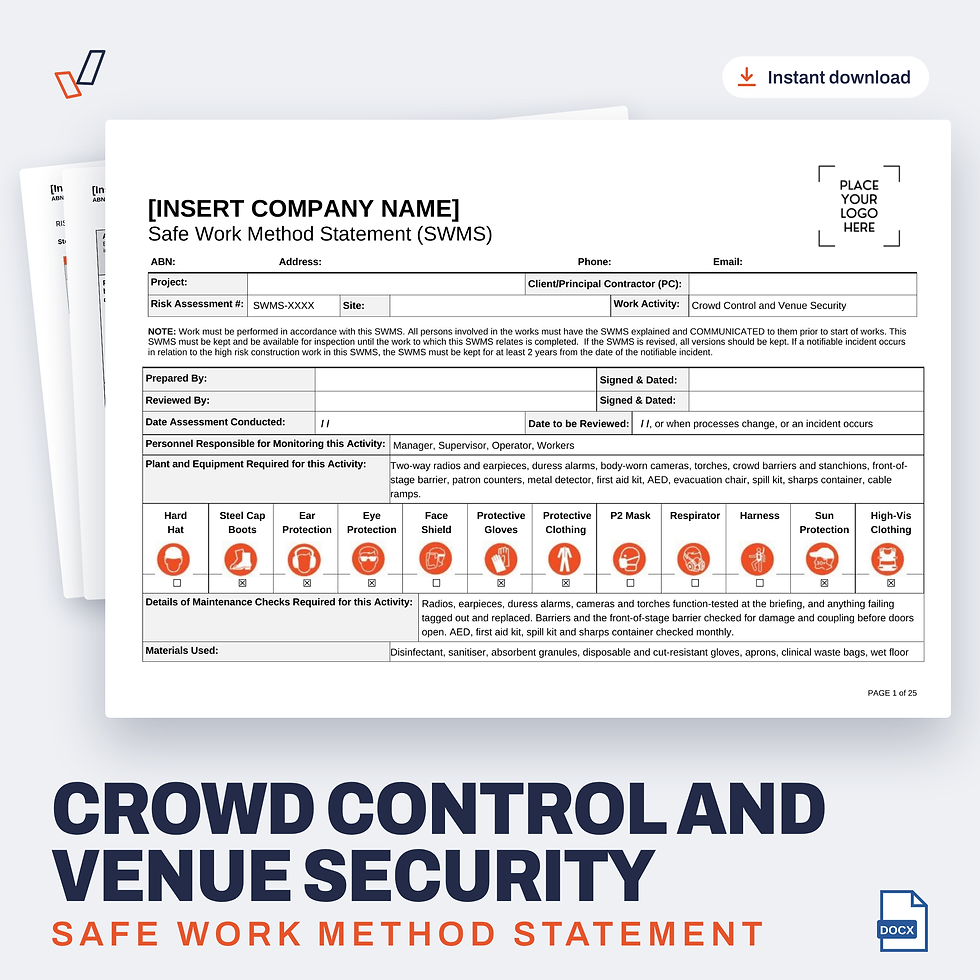
This Use of Force and Physical Restraint SWMS (Safe Work Method Statement) is pre-filled and covers security officers deciding when to use force, then escorting, restraining and holding a person, and what happens afterwards. It sets out 37 activities, from the shift briefing and licence checks to post-incident support and emergency response, with the hazards, control measures and risk ratings before and after controls for each. It's written by WHS specialists, aligned to Australian WHS legislation, and fully editable in Microsoft Word.
Who it's for
Security companies and guard services
Crowd controllers at licensed venues
Pubs, clubs and nightlife venues with in-house security
Event security providers
Shopping centre and retail loss prevention teams
A SWMS isn't only for construction. Plenty of security businesses use one as the written risk assessment for a task, the same way others use a JSA or Safe Work Procedure.
Use it to
Show clients, insurers and auditors how you manage the risks
Apply for tenders, contracts and supplier panels
Get through prequalification with Avetta, Cm3 and other contractor portals
Induct new workers and train them in the task
What this SWMS covers
Shift briefing, fitness for work and licence class, authority and training currency
Checking the area for glass, stairs, kerbs and drops before taking post
Radio, duress alarm and body-worn camera checks
Authorisation before issuing handcuffs, a baton or chemical agent
De-escalation, the decision to use force, and calling numbers before contact
Escorts, physical intervention and takedowns with an actively resisting person
Positional asphyxia from prone restraint, and the risks of neck holds
Restraining intoxicated, disturbed, unwell, pregnant or young people
Spitting, biting and blood exposure, and clean-up after an intervention
Bystanders joining in, weapons, fights and hostile crowds filming
Handcuffing, holding a person until police arrive and continuous monitoring
Police handover, use of force reports, psychological support and emergency response to a collapse
What's included
Hazards and control measures for 37 work activities
Risk ratings before and after controls, with a 5x5 risk matrix and the hierarchy of controls
PPE requirements checklist and high risk construction work checklist
Equipment list and maintenance checks for radios, duress alarms, body-worn cameras and first aid kits
Relevant Australian Standards, including AS 4421 for guard and patrol security services
Licence and competency requirements, including CPPSEC2106 defensive techniques and annual positional asphyxia refreshers
Site specific hazards section for anything unique to your job
Worker sign-off sheet and worker consultation record
Why use this template
Saves hours compared with writing a SWMS from a blank page
Covers the most common hazards and control measures for this work, ready to use out of the box
Fully editable, so you can add, remove or change anything to suit your site and how your team works
Helps your business stay compliant, with risk ratings, worker sign-off and consultation records already set up
How it works
Buy online and download straight away. You'll also get an email with your link.
Add your logo, ABN, project and site details.
Check it suits your site and task, edit anything you need to, and consult your workers before you finalise it.
Brief your team and collect signatures.
Common questions
Do I need a SWMS for use of force and physical restraint?
No. Security and crowd control work isn't high risk construction work, so a SWMS isn't a legal requirement. You still have to manage the risks, including assaults on officers and restraint asphyxia, and a SWMS is a practical way to record how. Clients, insurers and prequalification portals often ask for one.
Does it cover prone restraint and positional asphyxia?
Yes. It covers the risk of death from positional or restraint asphyxia when a person is held face down or with weight on the torso, the dangers of neck holds, continuous monitoring during restraint, and observation after release, when collapse is often delayed.
Can I change it?
Yes. It's a Microsoft Word file, so you can add, remove or change any hazard, control or rating, and add your own logo and details.
Does it suit my state?
Yes. It's written to the model WHS laws and suits all states and territories, including Victoria under the OHS Act and Regulations.
What if it doesn't suit my work?
You're covered by our 30-day money-back guarantee if it isn't fit for purpose.